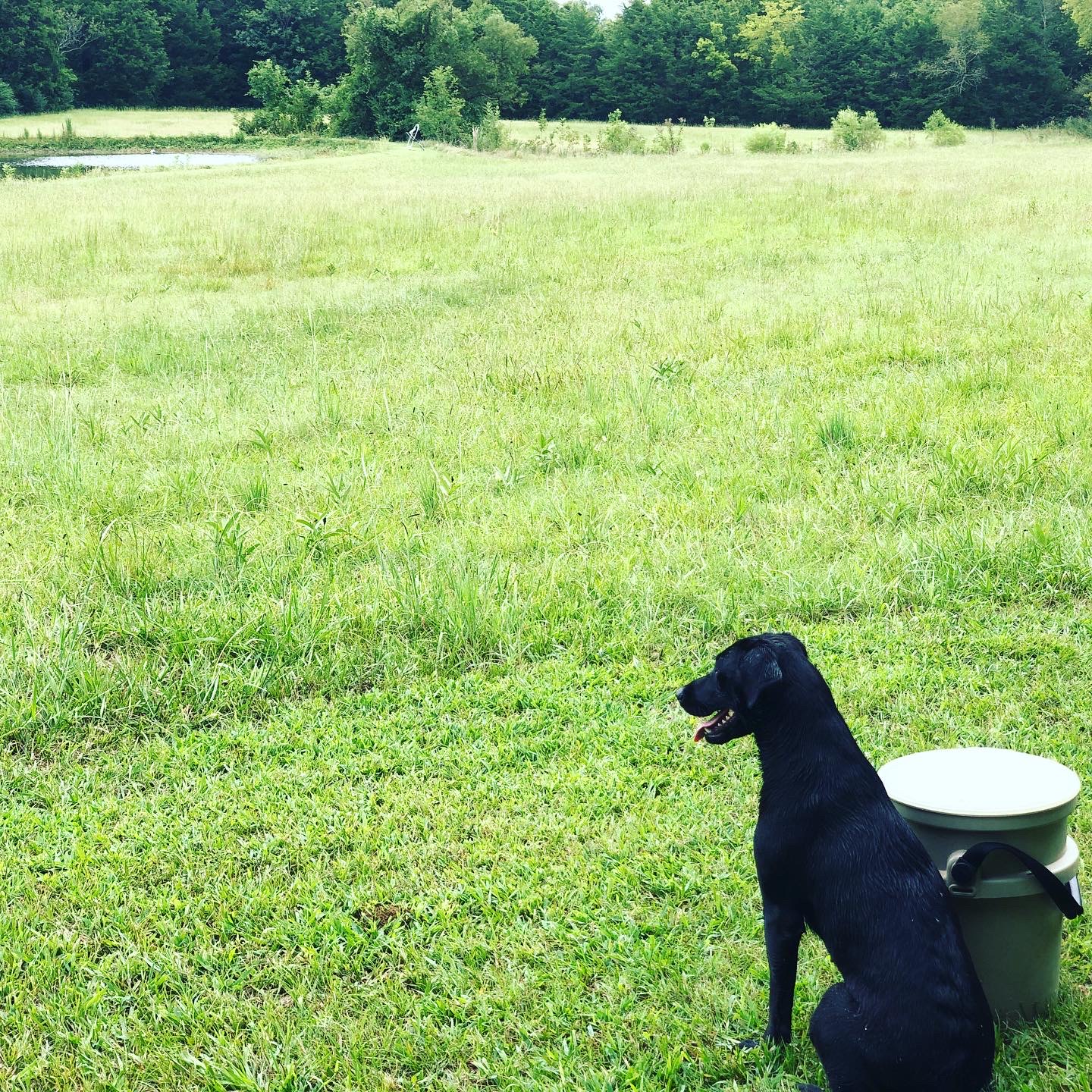
The 2020 hunting season promised to be one of the best yet, but as with most things in 2020, it fell short. I was looking forward to my first season with a working dog and had put tremendous time in to training and preparing for how hunting with dogs will bring new challenges and needs. The dogs and I had spent countless hours in the backyard training on obedience and gundog skills. Both the dogs and I benefitted from Cornerstone Gundog Academy’s online training app that gives you drills and problem solving for common issues. We traveled around town each weekend to various ponds for some water work and to train in new environments.
Our first hunt of the season with Sage was out with the crew at 737 Duck Club. I was put in touch with them through a mutual friend and joined the club for the first season with Sage to make sure we had plenty of reps. My cousin Greg joined in the fun and we watched the sun come up over acres and acres of corn stalks flooded to about knee height. It was a long and slow walk in the central Oklahoma red mud to get to the blind but we made it in time to set up a small spread of ducks and settle in.
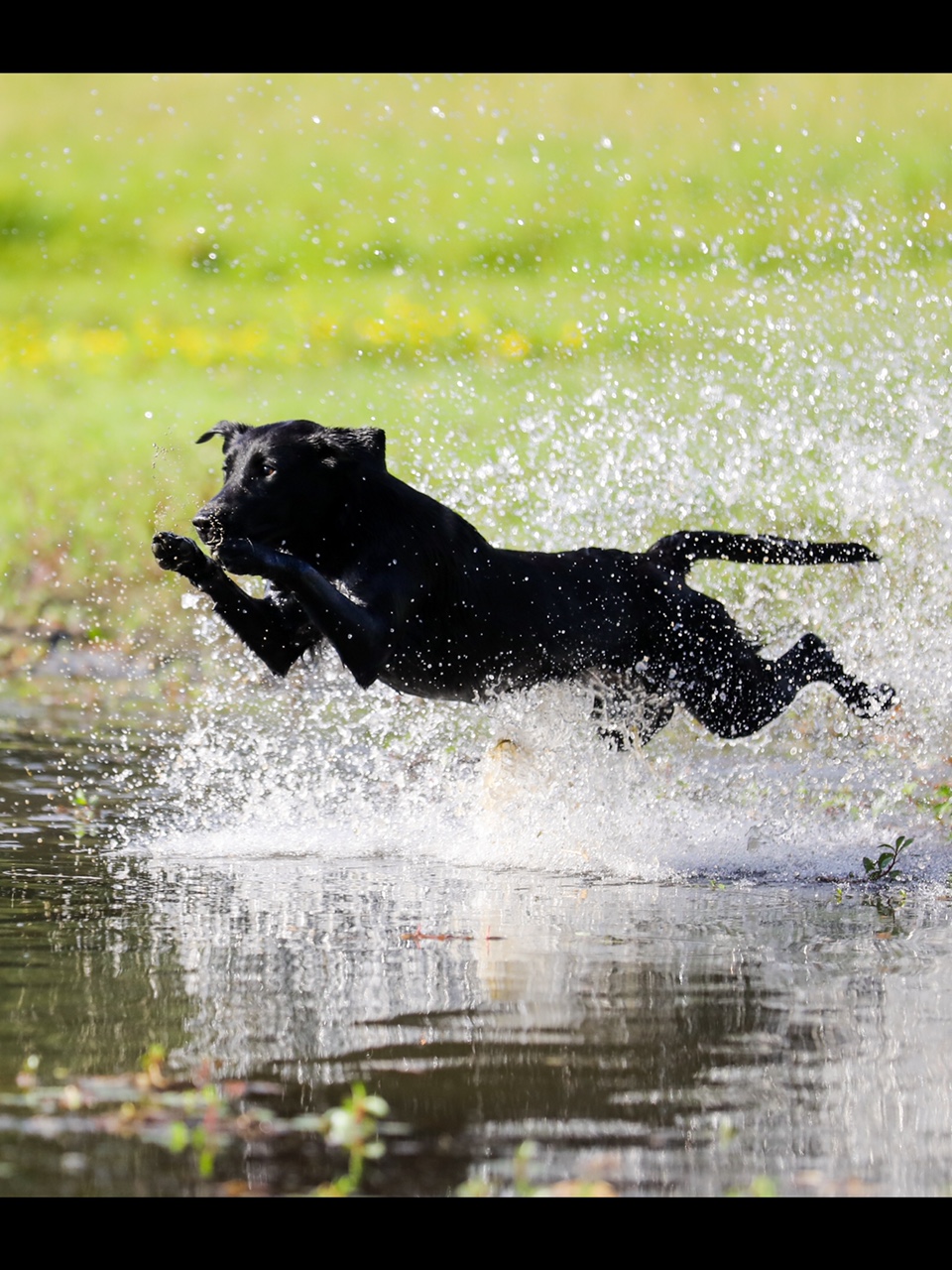
As the ducks came in and we started to shoot, it became abundantly clear that Sage was not enjoying the noise. We were in a buried metal blind and with each report she tried to exit the blind. Lessons were learned, frustrated commands were yelled, it was anything but perfect. We shot a few ducks, lost a few in the corn and slugged our way back through the mud to the truck. As if God wanted us to end on a positive note, we drove out of the corn field and I caught movement out of the corner of my eye. It was an injured drake mallard trying to make an escape. We hopped out of the truck and made our way over to the field, a quick shot as he tried to fly to safety gave Sage one last chance to deliver. She healed perfectly, took the command and went splashing in to the deep red water. She delivered a beautiful drake to my hand and happily jumped back in her Gunner kennel.
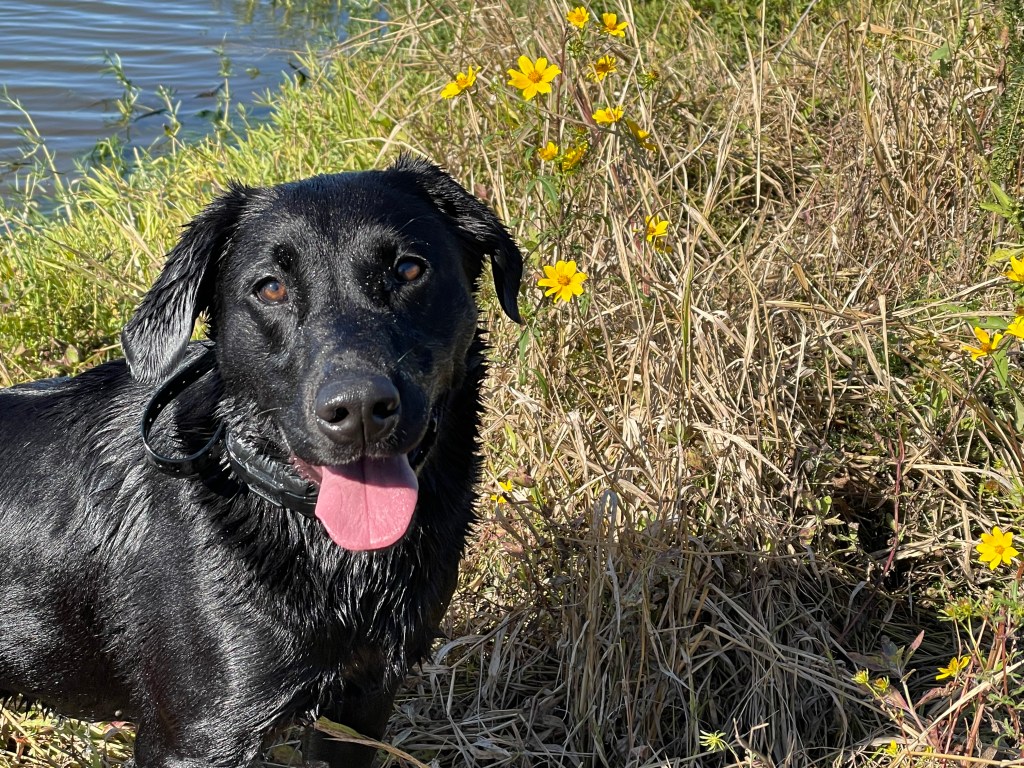
Sage the dog
The best part about this duck club was that it was only 20 min from where I grew up in Shawnee, OK. This allowed for a free place to crash in between hunts and easy childcare when my wife let me know leaving the kids at home to hunt would not be in my favor. What I did not now at the beginning of the season is that this would give me more time with my dad before his time came to an end. My last hunt of December was on a trip to 737 the week before Christmas where we would celebrate and exchange gifts with my parents and kids. Sage had gotten into something and was having frequent diarrhea so I was hosing out the kennel daily it seemed. Other than opening gifts with the kids, my list memory of my dad is the two of us laughing at Sage running through their front yard covered in diarrhea as I hosed out the kennel yet again. He helped me wrangle her and clean her off before we headed back home. We would talk a few more times in the next week, mostly about a book we were reading at the same time by Jack Carr, The Devil’s Hand. A few days after Christmas my brother called one evening to say that dad had just left the house in an ambulance and they had done CPR in the living room before heading to Oklahoma City. The next few weeks are a blur but most was spent on the road between the hospital, Shawnee and my home in Tulsa.
A good friend reached out after my dad had been in the hospital a few weeks and asked if I would like to come hunt on his ranch the next morning. I had already been on the road quite a bit and this would be another 4 hours of travel but promised to be a great flooded timber hunt. The scouting report was several days of wood ducks and mallards packing in this small honey hole so I decided to do something to take my mind off of what was happening in that hospital room.
My cousin picked me up a little after 3am and we made the 2-hour drive together in the dark. We avoided talking about what was going on other than to say not much had changed. We instead talked about our kids, our wives and details of other hunts that season that we had not been on together. We arrived to the barn as the other guys were pulling out in the quad. We quickly threw on our waders, grabbed our guns and blind bags and piled in. A 10-minute drive and we arrived at what seemed like an area just as dense as the rest of the forest. It took walking through a small trail to see where the tree canopy opened up just enough for the woodies to tumble in at first light.
The Wood Duck Hunt
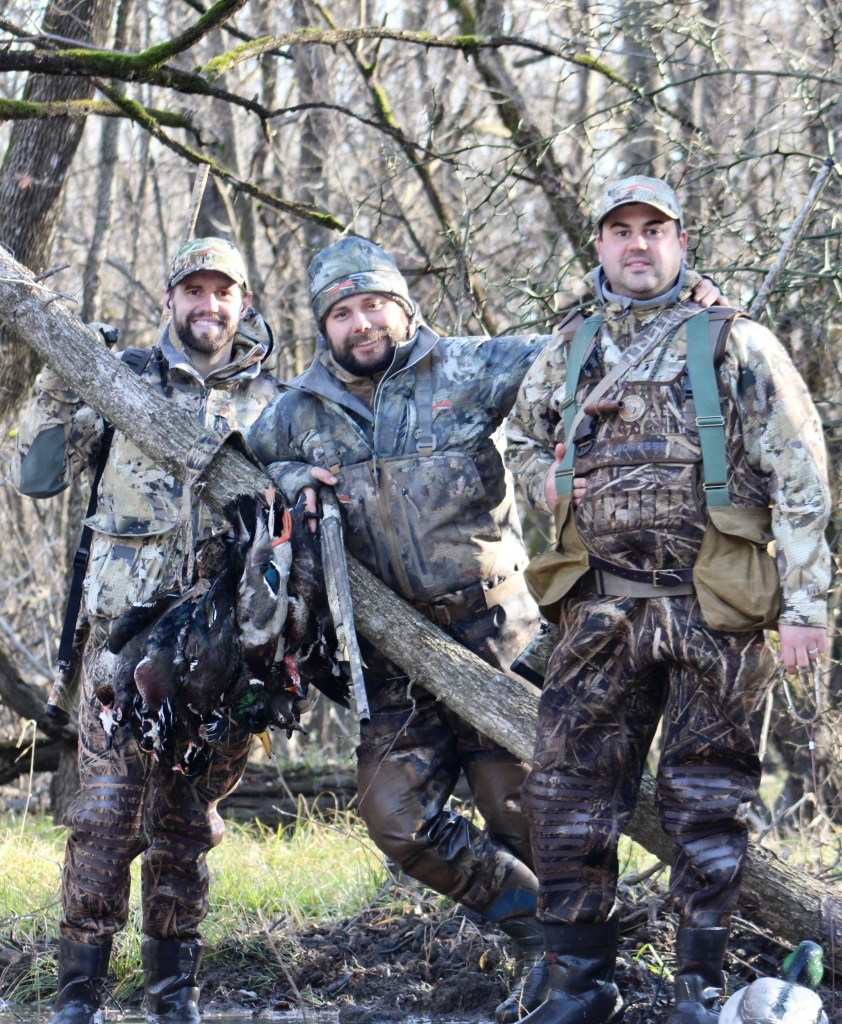
We unloaded decoys and dogs and started to set up our spread, strategically positioning woody and mallard decoys along with a mix of motion decoys. Just as the scouting report had drawn it up, 5 min before shooting light came the first group of woodies. We watched them splash in, wave after wave, it was fun to watch. Once shooting light arrived, we took aim on the next group and the water below us exploded with birds exiting at the sound of guns. We had our limit in about an hour and headed back to the house to cook up a big country breakfast on the Blackstone griddle. A few of us cleaned birds while the others sorted gear, dogs and breakfast. It was a great morning and a great way to think about anything else, even if only for a few hours.
We took my dad off of life support a few days later and then Sage left for school a few weeks after that. Needless to say, the last part of the season wasn’t much to celebrate but I have a feeling that last hunt of the year will be one I remember for a long time. My dad was not a hunter but he enjoyed listening to my stories and giving the dogs a belly rub. I will certainly miss giving him the report as I pull in and his remarks about how much red mud I tracked into his driveway. Time spent afield and the friends you make there continue to be the best there are.
It’s almost impossible to grow up in the US and not have experienced the joy of owning or playing with a dog. I recall begging my parents for a dog and the excitement of coming home from the pound with “Sandy,” right until we learned she got car sick and vomit exploded all over the back seat of our station wagon that is. While my first dog ownership experience was warped due to my mother’s willingness to do most dog affiliated chores, I have learned as an adult, that many of these menial tasks are what lead to that deep bond.
My first labrador retriever joined our family the week after my wife and I returned from our honeymoon. Chori was from Lab Rescue and was excited to join our new family, even if our terrier-dachshund mix (Gus) was not thrilled with the change. She was a 60-lb chocolate lab that brought tremendous joy to our family for 10 years. She saw us welcome two children, graduate from medical school and residency and move two times. Two years ago she crossed the rainbow bridge but not before turning this family into lovers of labs, all the licks, all the hair and all the love.
Shortly after Chori’s passing, I was able to convince my wife that my hunting habits had advanced to the point of needing a special dog to go with me on these great adventures. I started researching various breeder’s in our general area and used social media as a source of references for people that were having good experiences. I eventually came across Barton Ramsey with Southern Oak Kennels (SOK) out of Okolona, MS and learned about the difference in British Labradors and American Labradors. They were also starting a new at home training program called Cornerstone Gundog Academy (CGA) that promised to give the unexperienced gundog owner (me) a step by step online video based tutorial on how to develop your handling skills and the dogs obedience and hunting skills.
After a brief discussion with the wife I put my deposit in on a puppy, but prior to this I had to answer quite a few questions. Any reputable breeder should try to match what you need with a particular breeding they have in process or one they are planning for the future. For us, it was important for our dog to have an “off switch.” We wanted a hunting dog in the field but a house dog when we came home. I was also interested in a smaller framed dog as I rarely hunt in the ice where a heavier dog can be nice to have.
The time came for our selected breeding of puppies to come home so I traveled to SOK to bring our little Luna home. Unfortunately, the season we brought Luna to her new family just so happened to be the worst outbreak of Parvo virus in years. Luna only stayed with us for a day before going to the vet where treatment eventually failed. Throughout this process, the folks at SOK were wonderful to work with on getting in on a new breeding and getting another puppy home.
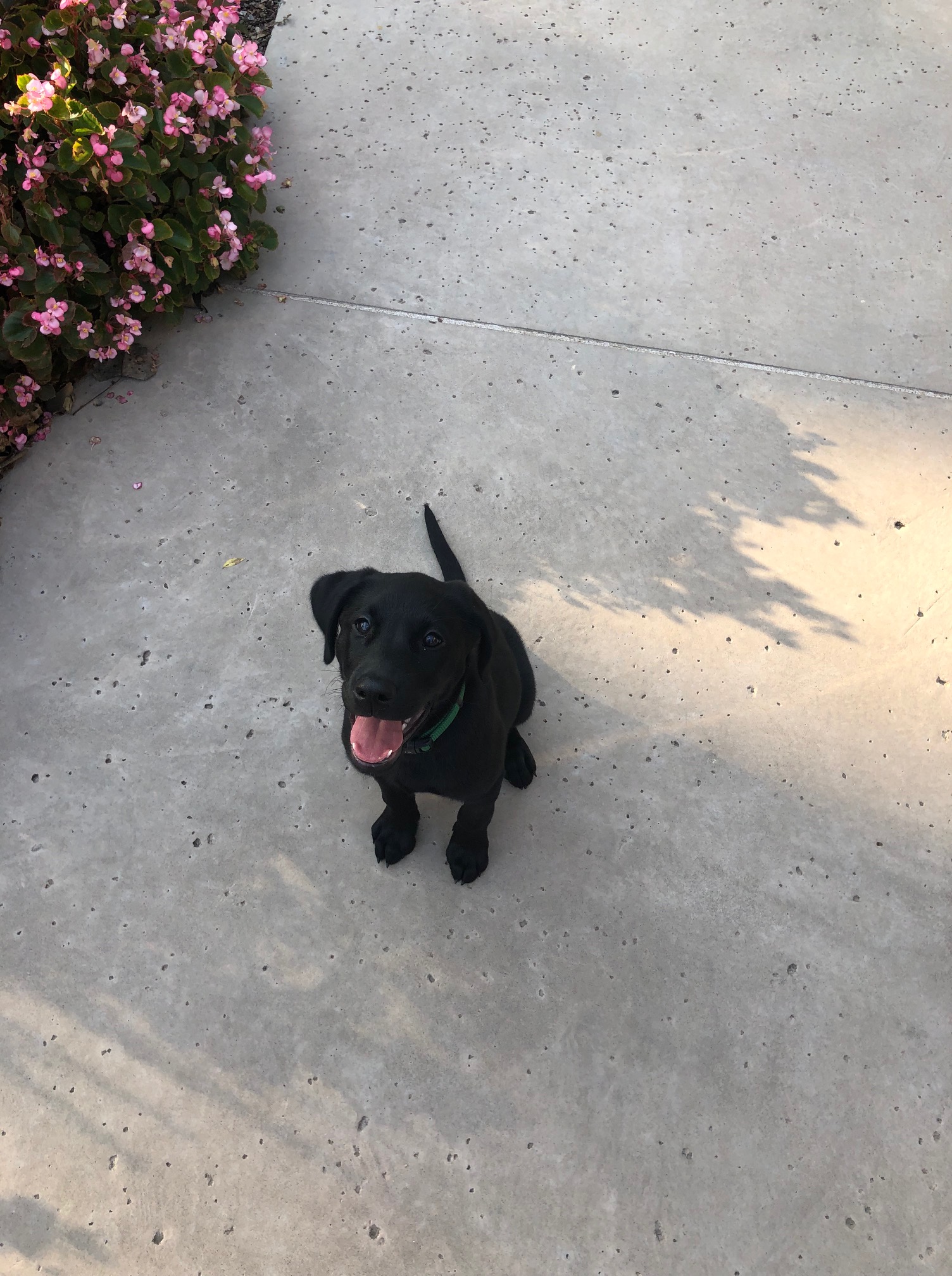
On Labor Day weekend we welcomed Sage to our family and she was immediately welcomed by our kids and sort of welcomed by our 17 year old dog Gus. We spent the next 6 months together working through normal puppy challenges and starting to train for her future roll in the duck blind. In this phase, the Cornerstone Gundog Academy, was invaluable in getting her started down the right path. By the following February we bid her farewell and sent her back to SOK for 6 months of school. Although this route was expensive, I felt it was the best path to success with our busy lives at home and the added craziness of a pandemic.
About 1 month prior to our scheduled pick up time, Barton let us know that Sage’s mom was going to be retired to a good home. After another brief chat with the wife, we started to plan to bring 2 dogs home in August. At the end of summer we made a family road trip to Okolona and surprised the kids with a bonus dog, Madge. She has been a wonderful addition and remains an excellent example to Sage on how a gun dog should work.
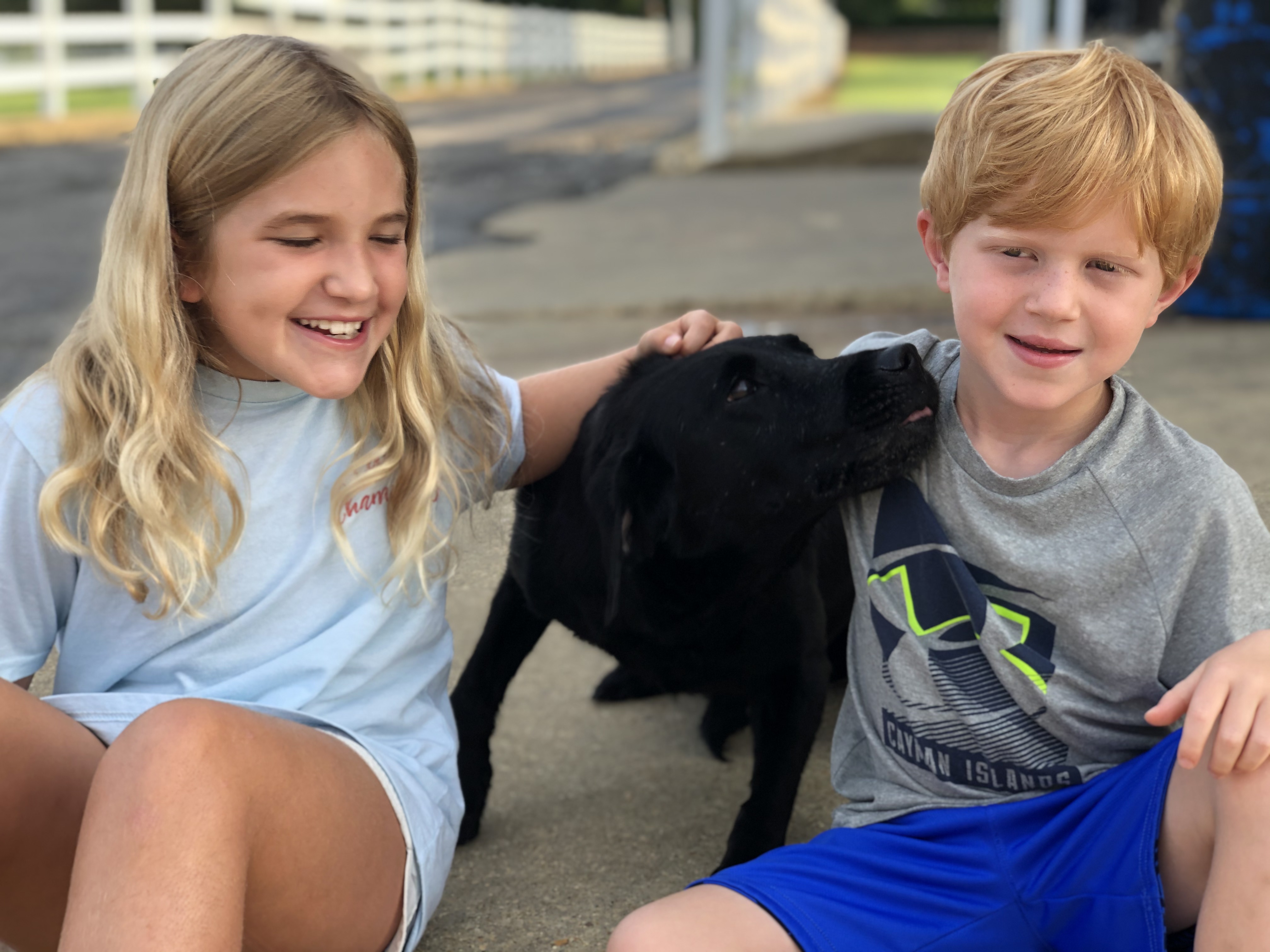
I look forward to many new adventures with both dogs and this has been an amazing season to see so much hard work be put into action by these two. Madge has gone dove and duck hunting while Sage has made her first retrieve from a duck blind. My daughter has taken an interest in helping train them and I look forward to watching that bond grow for years to come. Dogs are the best.
After the limited sleep that came after staring a python in the face, the issue at hand was clearer than ever, I still had not seen a buffalo and it was day 4. The day started as the rest had, 3:30 am wakeup call with cold breakfast options and a walk out on the patio. Already pushing 90 degrees, coffee was unwelcome and caffeination came via an orange South African drink provided by our hosts. A few distant trumpets from the exiting elephant herd reminded us they had been there all night, a brief roar from the local lion reminded us all that he was still king. We checked our rifles, inspected our ammo pouches and gathered the rest of our gear, this was our first day moving out of the Gaza province to what we hoped would be better luck.
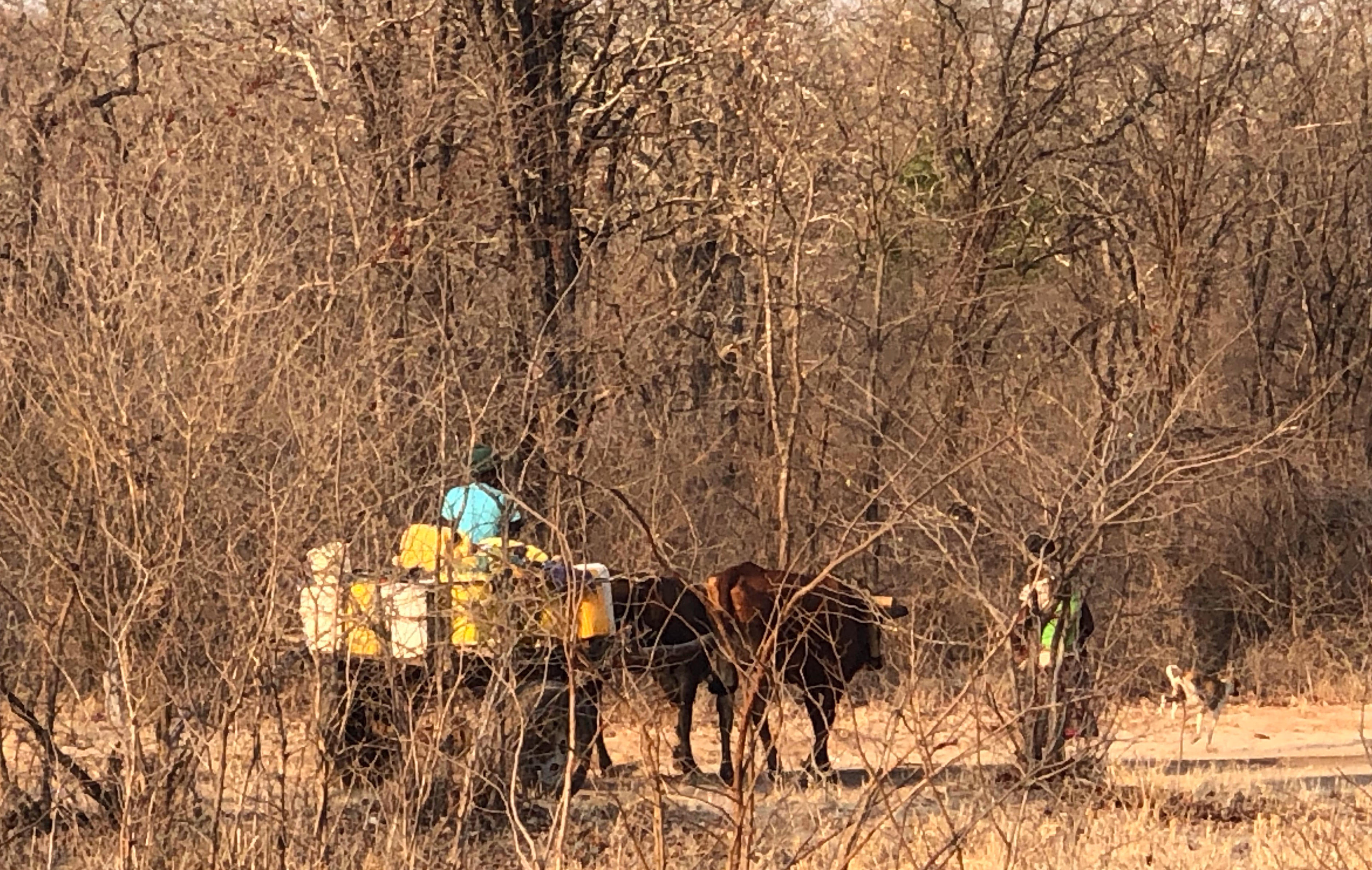
A water cart heads to town to fill up from the well on Main St.
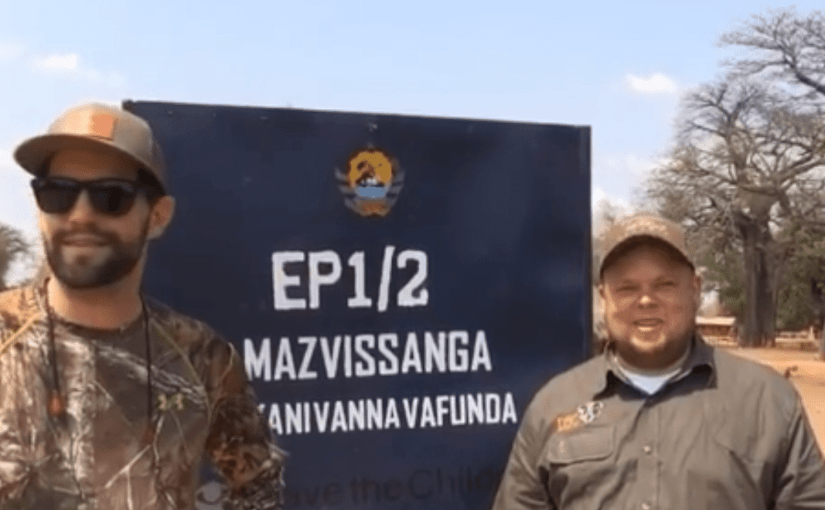
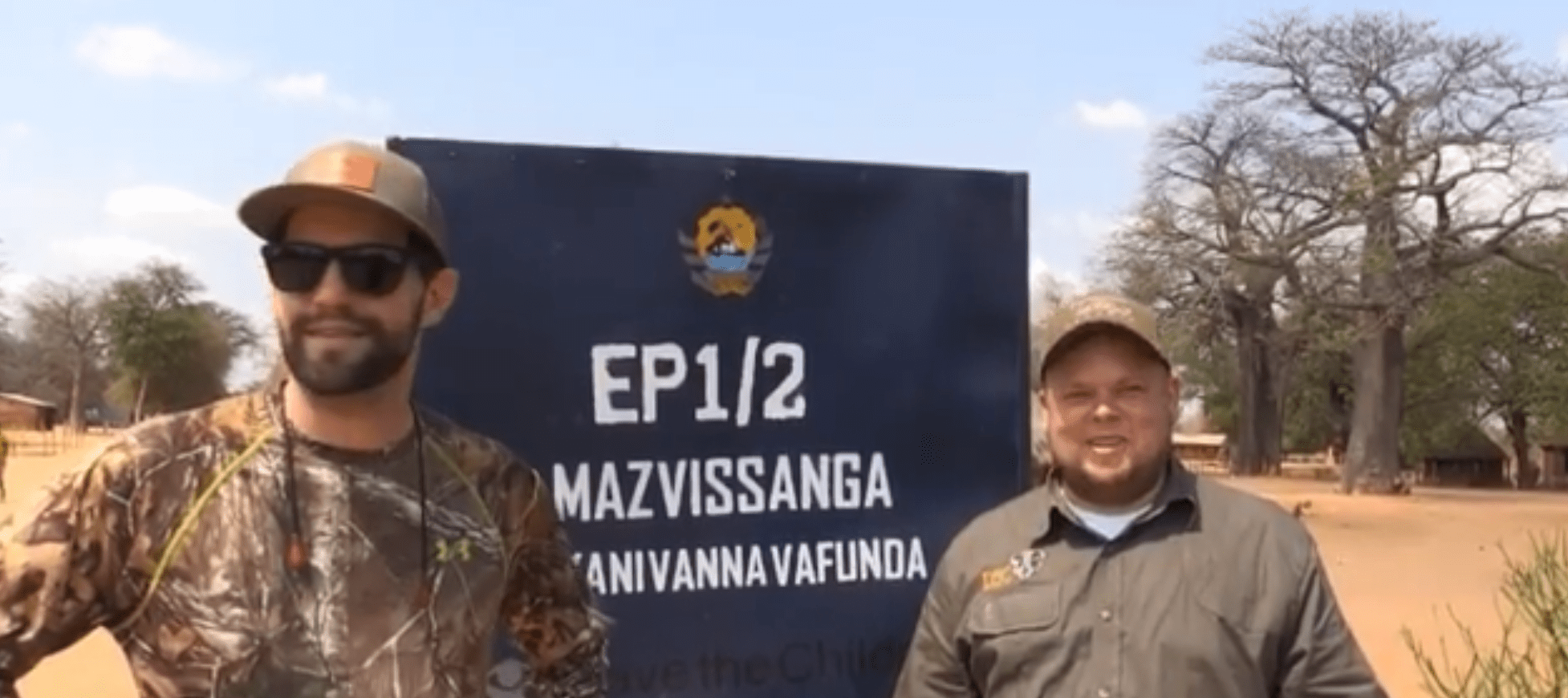
The drive into Mazvissanga took around two hours and was over roads that could dismantle an average suspension in short order. We made it just after sunrise driving down what we affectionately called “Main Street” or “Rodeo Drive” in the coming days. Clearly in vehicles that made us stand out, it took no time for all the kids to exit school and their homes, quickly rushing to see what or who had come to their little town. We parked outside of the local government house where a young man in a red Adidas golf shirt greeted our professional hunters (PH) before showing them inside. We were told to wait in the truck, partly to keep us sheltered from the bribing that would take place, partly to keep an eye on the truck and its contents.
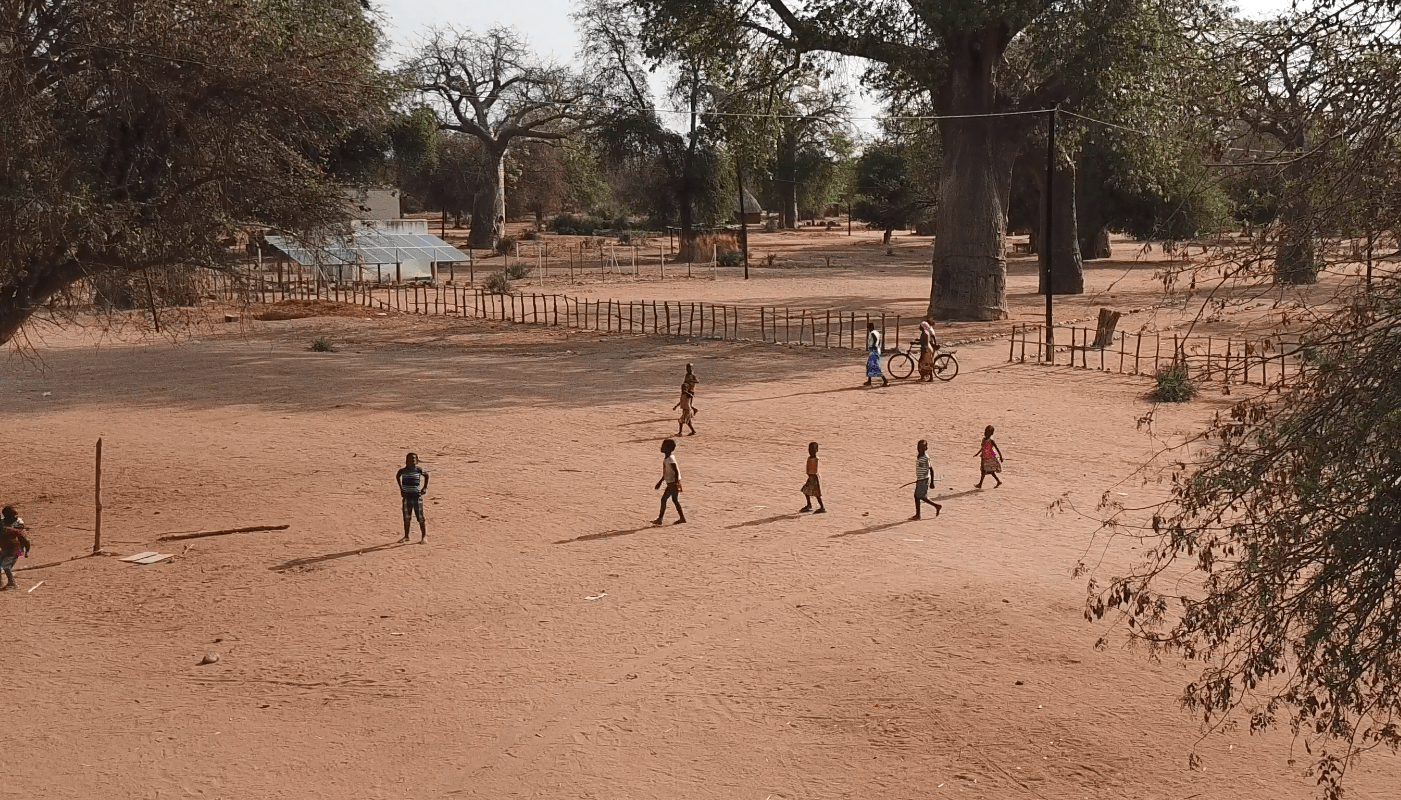
Drone footage from town with the kids in chase mode.
After being told this would take at least an hour, I couldn’t help but get the drone I had borrowed in flight, I knew it would blow these kids’ mind. While my hunting partner played makeshift soccer with a mixture of trash and tape fashioned into a rough sphere, I readied the drone, controller and cell phone. I placed it on the hood of our land cruiser and gave the take-off command, the noise of the 4 propellers quickly garnered the attention of 20+ kids as I flew it 20 ft off the deck up Main St. Soon, the excitement of soccer and modern technology shifted to boredom as the wait pushed past two hours and we still did not have permission to hunt. Around this time our PH’s emerged, visibly frustrated, the update brought more disappointment. The local government man had been sufficiently bribed but his superior in a town several hours away was mysteriously unable to receive the fax sent multiple times from our location. It was also clearly known that the paperwork had been filed correctly weeks earlier and we already had the permits to hunt the area. We were told to return the following day and we would have things in order then.
The entrance to Main St.
Now day 5, the pressure for success and the nervousness of failure was beginning to feel very heavy. Worried that the government folks would have more methods of extracting further cash, my hunting partner and our friend and PH Beans headed back out of Gaza to Mazvissanga. They would try their luck that morning while I hunted near camp with plans to join them in the evening if things were arranged. As had become the norm near camp, we saw very little other than common duiker and the occasional tiny ten animal that never gave a shot opportunity. We made it back to camp for lunch where we were joined by the rest of the group, we would be meeting the Chief that night for a blessing of our guns and plan to hunt the next morning… for buffalo.
The drive to the chief’s community was about 15 minutes past Main St but before we left town, we had been instructed to bring the chief provisions for the blessing. This included beer, palm wine, tobacco and cash. After bartering for these essentials in town, we headed to the chief for the blessing of our rifles. As soon as we exited the truck, we were told to remove our shoes and go sit with the chief at a makeshift setup including a few bowls, a cup and hand carved idols. The cup was filled with palm wine and the bowl with tobacco leaves that the chief ground between his fingers as he chanted and sprinkled the bits over our rifles. He poured some palm wine into the sand before taking a large drink and spitting a fine mist of milky white wine over our rifles and scopes. He then looked at us, smiled, and told us to get up in broken English. With our shoes back on and wine spattered rifles in hand, we loaded up in the trucks and headed back to camp… we were hunting buffalo in the morning.
The excitement resulted in little sleep but the adrenaline made it easy to stay awake on our drive back to the hunting grounds. We arrived on Main St at dawn and loaded up the chief’s son and the government man who would supervise the hunting and procurement of meat. We made it to the hunting area around 8 am and the scouting party headed down the hillside. Within 30 minutes a growing number of bees had taken interest in our location, so many that most of us had to shelter in the trucks. The heat meant we had the cars on which interestingly seemed to make the bees grow in number. We later figured out the drought was making the bees thirsty and they were drinking the condensation from the AC. The scouting party took about 2.5 hours to return, as time dragged on, we were told the longer they were gone the better as that meant they were on tracks. This proved to be accurate as they returned with good news and a location for the herd. We drove about 5 minutes down the road and across a large pasture to a tree line where we parked. There we loaded up with water, sunscreen, bug spray and our rifles before heading out into the bush. The area had been burned in some places after a recent harvest of corn and cotton which made for charred dust on everything but easy walking initially. Soon that gave way to waist high grass and thorns at nearly every turn, I am certain everything has thorns in Africa.
After walking about 5K, we had lost all sight of civilization and were staring a herd of buffalo in the eye. We worked a tree line for cover to get in position to judge the males on trophy quality and begin to make ready for a shot. By this time the sun was high and the temp had already reached 110, we took a break for water, to check our rifles and discuss a plan. Brandon would hunt first and I would hang back with the trackers while Beans tried to work into a position to get Brandon a shot.
The first attempt resulted in the heard getting to their feet and running through a tree line and coming to rest in another clearing. We worked them another time with the same result before getting Brandon into a good position. At this point we were about 7K on foot in 112-degree heat, legs bleeding from all of the thorns and covered in black char, plus the adrenaline of dangerous game, this was the most amped up I have ever been on a hunt. Nearly a week of trying and Brandon is on the sticks, finger on the trigger with the target bull in the reticle with sweat running in his eyes. He and Beans confirm that they are on the same bull, as soon as Beans begins to say yes comes the report of the rifle. The crack of the custom 416 Rigby from Montana Rifle Company was so loud and the bull so close that you could not hear the customary thwack of impact. As the heard moved off we slowly approached the location of the bull with no result. Brandon was sure he made a good shot but no one heard the impact. Within seconds we heard a death bellow 75 yds ahead of our location. We walked toward the sound but the tall grass made it difficult to see. Luckily, the animal moved enough to locate and we found him wrapped around the base of a tree, dead. A beautiful 40” + bull was down and Brandon was ecstatic.
Making a plan with Beans after Brandon had a buffalo down.
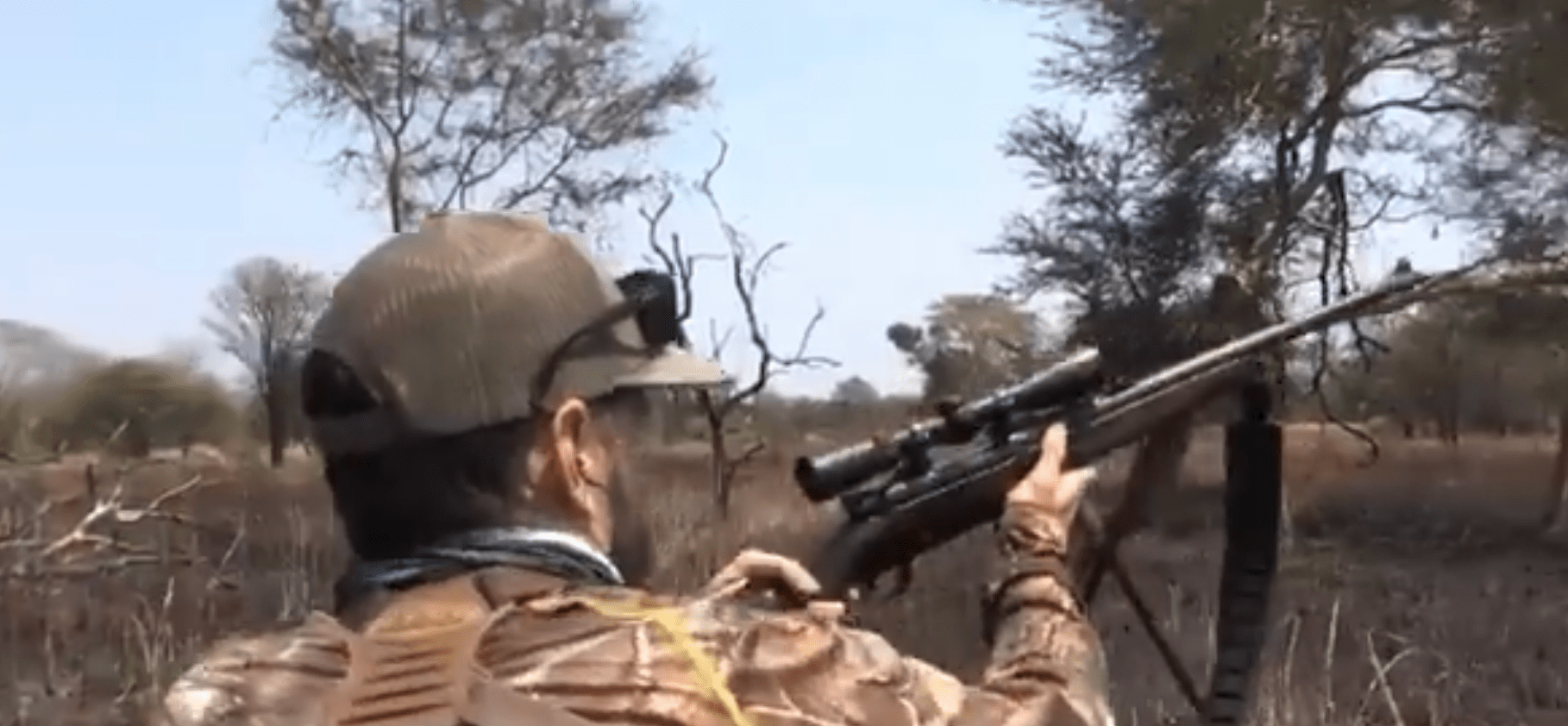
After we congratulated each other Beans noticed the herd was only 200 yds away and in the opening next to a tree line. He quickly told me to ready my rifle and follow closely behind him using the cover of a large bush. We stopped to glass the group at about 120 yds and located another trophy quality bull in the middle of the herd but surrounded by females and younger bulls. Beans grabbed the shooting sticks as we slowly moved away from the bush far enough to have a clear shot. The group was resting under the shade of three fever trees and seemed unthreatened by our presence. The bull seemed irritated however, thrashing his head side to side and looking at us frequently. I placed my rifle on the sticks and with my scope power at 4 I was able to easily locate the bull and see enough detail to make a good shot. After about 30 seconds, which seemed like 30 minutes, the cows were still not allowing a clean shot and I had to let my eyes rest. I continued to watch closely until it was clear the cow obstructing my shot was beginning to feed away from the trophy bull. Again, ready on the sticks at 110 yards I could see the bull’s chest come into clear view but his head continued to dip and swing obstructing his vitals and not allowing for a head shot. Beans stayed close, coaching me through the process, and in typical Beans fashion predicted what the animal would do next. He said that the bull will stop with his head in one direction soon, if I am comfortable with a frontal shot, I must take it then. We discussed anatomical land marks to ensure I was aiming correctly for the body position I was being offered. As if he was waiting for us to finish and on cue, the bull stopped and looked to his left holding his gaze on a cow. I settled my cross hairs just to my left of his midline and a little higher than my intended impact mark as I didn’t want to shoot too low and miss entirely. I slowly squeezed the trigger of my Winchester Model 70 in .375H&H Magnum until I felt it kick. That thing hurts every time I shoot it on the range but I must say that shot was painless as the adrenaline was through the roof as that bull crumbled into a cloud of dust on that dry and sweltering hot afternoon.
Getting on the sticks and settling in to make a shot.
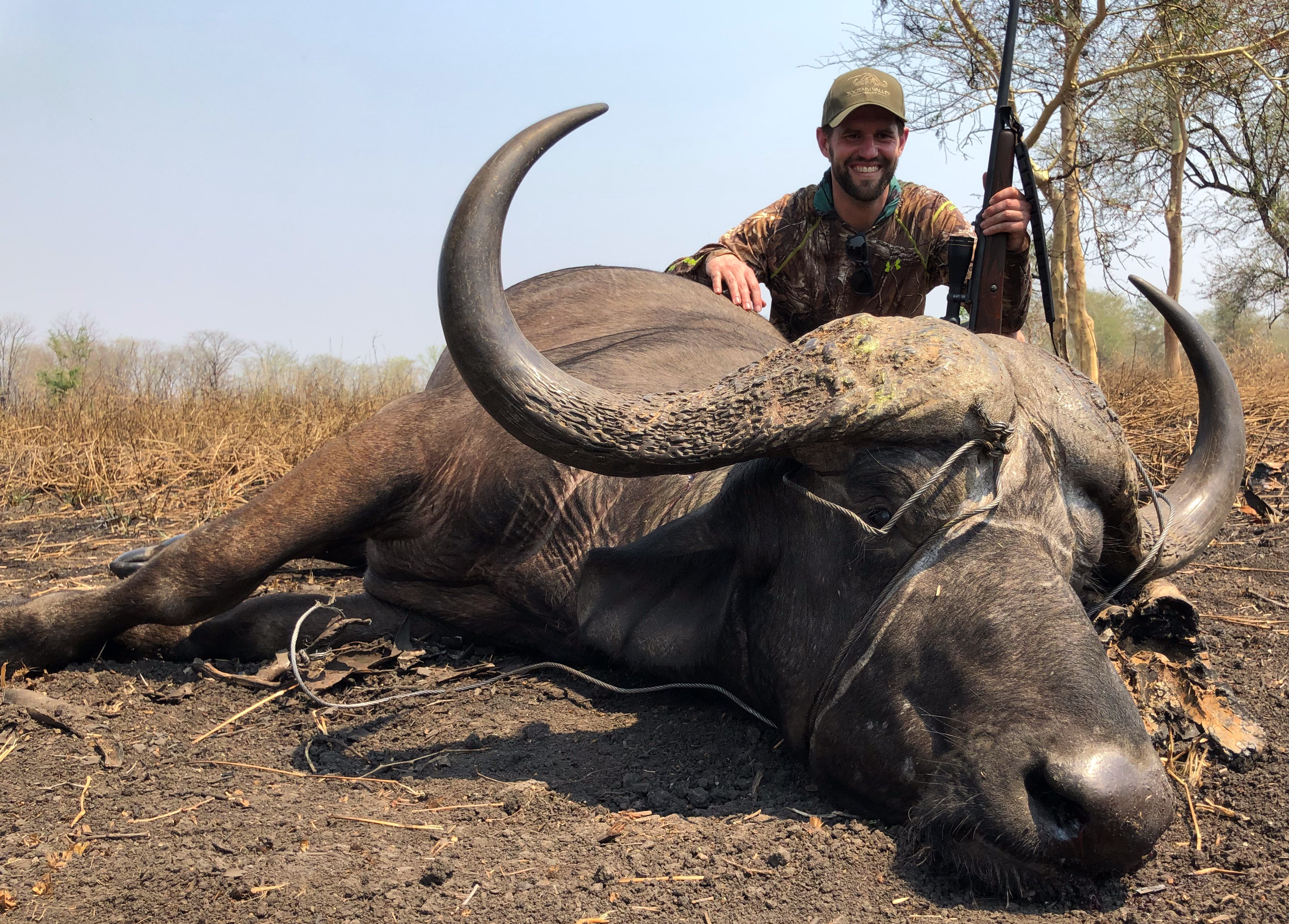
We approached the bull to find his head and front leg wrapped in a snare, more signs of the poaching that had ravaged that area of most game and clearly the cause of his head thrashing behavior. Many high fives and hugs ensued, as the adrenaline began to decline, the intense heat became a factor. We waited for the trucks left behind to make it through the thick bush and in that time, we realized how little water was left. Now at 116-degrees, the wait was miserable. Fortunately, the truck held water, food and all the gear needed to get these two massive beasts loaded up for transport. It took about an hour and a half for the trucks to arrive and another two hours to load the animals via ingenious methods I had not seen before. As we exited the province and headed back to camp each town came to great the trucks shouting “nyama,” a near universal word for meat in Africa. Once back in camp, we celebrated as the skinners got to work and the chief’s son and government man kept watch over the nyama.
Bull down under the fever trees (yellow bark in the background) with a snare on his face.
So the conclusion on this hunt was old Africa is hard to hunt, the animals are harder to find, the areas are heavily poached and the systems in place for wildlife conservation do more to serve the government than the wildlife. This government group received thousands of dollars, hundreds of pounds of meat and did little to improve habitat or curb poaching. We did feed every tribe in the area for weeks to come and provided valuable protein to their diets that rely mostly on grain and other easy to farm staples. There are far easier places to hunt buffalo, there are places where the trophies are larger, but this was how my buffalo story is told and I am absolutely ok with that.
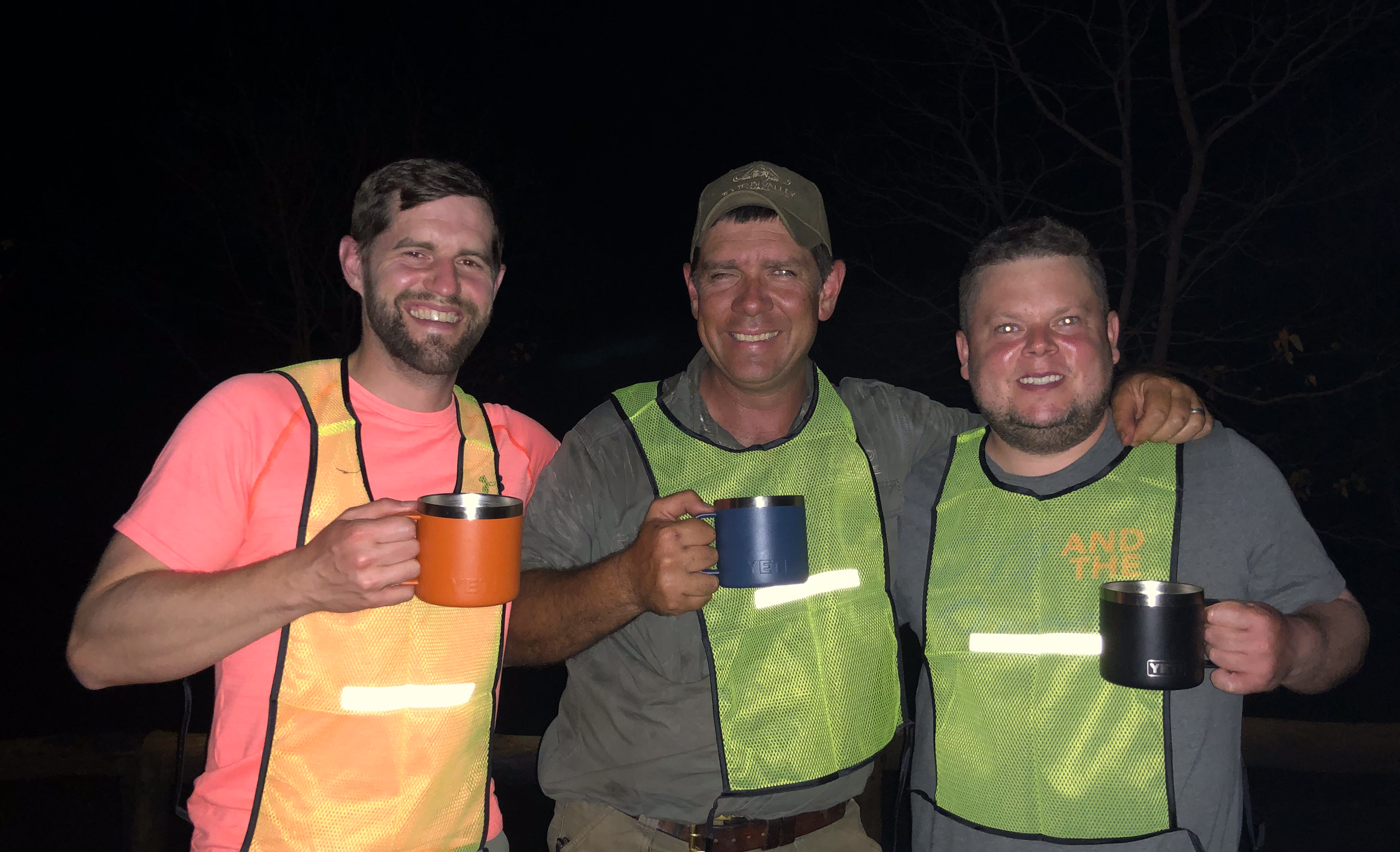
A successful dangerous game hunt leads to safety vests and many brandy and cokes. Trust me, it’s a thing.
I have waited a few months before writing about my trip into Mozambique for multiple reasons. One, we went into full holiday mode and the last 3 months have been a blur, as I am sure everyone can relate. Two, I was not happy when I got home. I had an authentic “old Africa” hunt without question, but I struggled on deciding if that experience was something I was satisfied with. After a few months at home, I have come to terms with the two weeks I spent abroad and am satisfied that my experience was authentic but disappointed in what the future of old Africa appears to be.
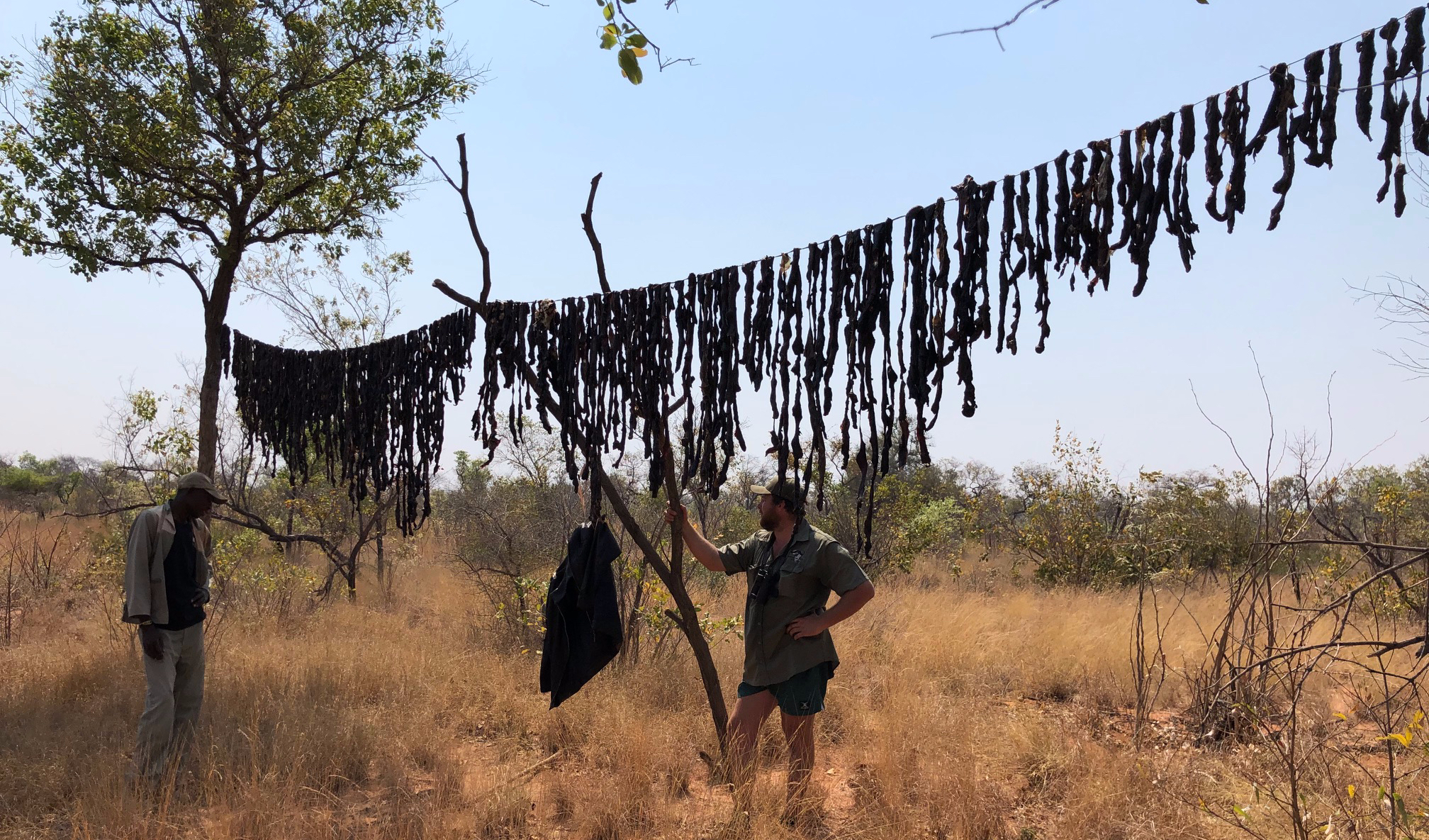
One of our PH’s and the head tracker located this poaching camp. This is the meat of a poached eland drying in the sun.
We left Atlanta around 7pm on Oct 17 landing in Johannesburg at roughly 5pm on Oct 18. We went to collect our bags and guns, a relatively smooth process with our hired help to submit paperwork ahead of our arrival. We waited there with our driver for a few other hunters to arrive who would also be staying at the same bed and breakfast for the night. They had an early flight the next morning to Namibia, we would be leaving at 4am by truck for the Pafuri border gate to Mozambique.
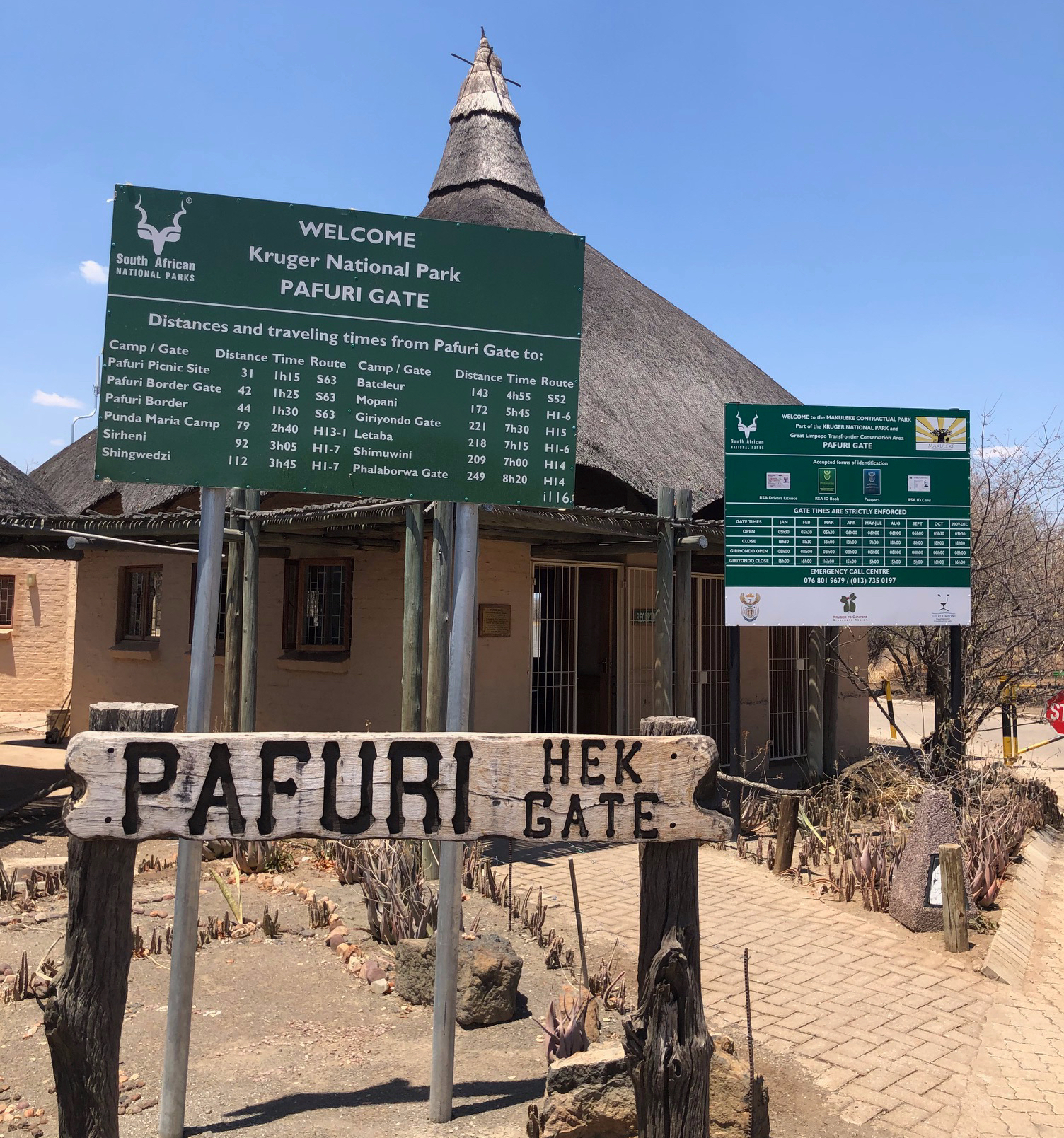
Kruger National Park entry, Pafuri Gate
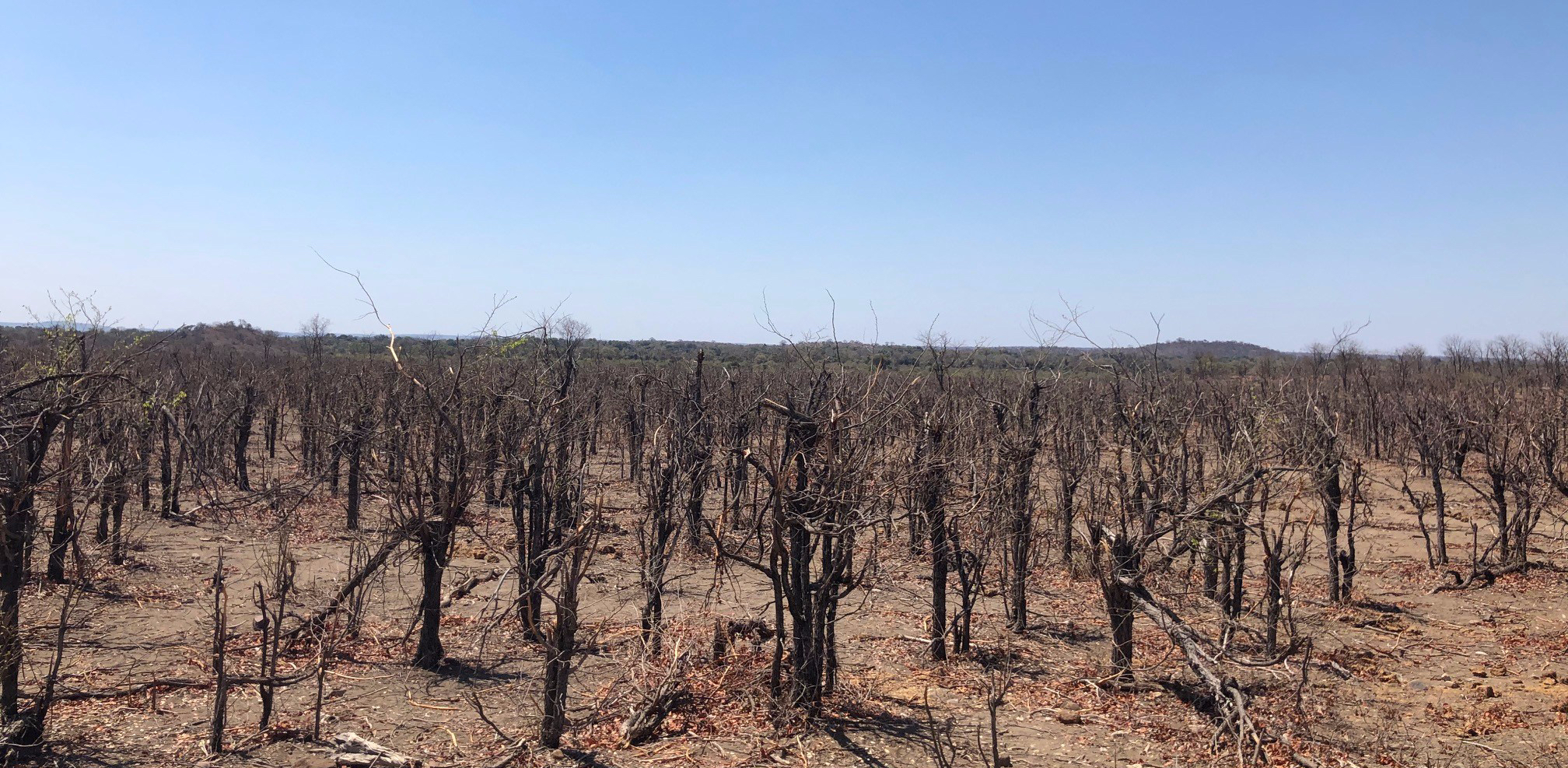
The drive was uneventful, hundreds of miles on typical highways with toll booths, greasy road trip food, standard stuff. The final few miles of the drive on the South Africa side was through Kruger National Park. This area had been decimated by elephants left unchecked by predators or conservation-based hunting and were limited in their range for food. Almost no wildlife remained in the area due to the deficiency of food.
Trees and underbrush picked clean by elephants
I have never in my life seen such a contrast as when we left South Africa and entered Mozambique. From concrete road to pothole ridden dirt, from 4 wheel-drive truck to bicycle or from modern building with central AC to cinder block structure with no electricity, the contrast between the two countries was stark. We expected to be harassed, we expected to be prompted for bribes and we expected to be on our way with less beer and less cash than when we entered the country. The process of immigration and importing our rifles went pretty much on schedule although they conveniently found issue with some of our paperwork which resulted in a few more hundred dollars in bribes than planned. From there, we made another 8-hour drive to camp, deep into the Gaza province along the Zimbabwe border.
Immigration at the Mozambique border. Yes, they have an AK-47 on their flag.
After 4 hours of sleep we were locked and loaded in the Land Cruiser headed out to track buffalo. Shortly after leaving camp our PH showed us fresh elephant sign all over the north side of camp with fresh tracks, huge piles of dung and trees 12” in diameter broken like twigs. Near camp, a lion would make sure everyone knew he was there every 30 minutes during the night with a deep roar that echoed through the banks of the Save (pronounced like Pave diamond) river. The area had been plagued by drought for the previous few weeks and only a few watering holes remained in the area. We started our tracking at the largest of the remaining sites where we found impala and at least 100 baboons watering at first light. After they scattered, alarmed by our arrival, we set out looking for fresh buffalo tracks in the dry surrounding dirt. Our trackers were unable to locate anything fresh so we moved on to the next spot, and the next, and the next. By the end of day 1, we had not laid eyes on a buffalo, welcome to “old Africa.”
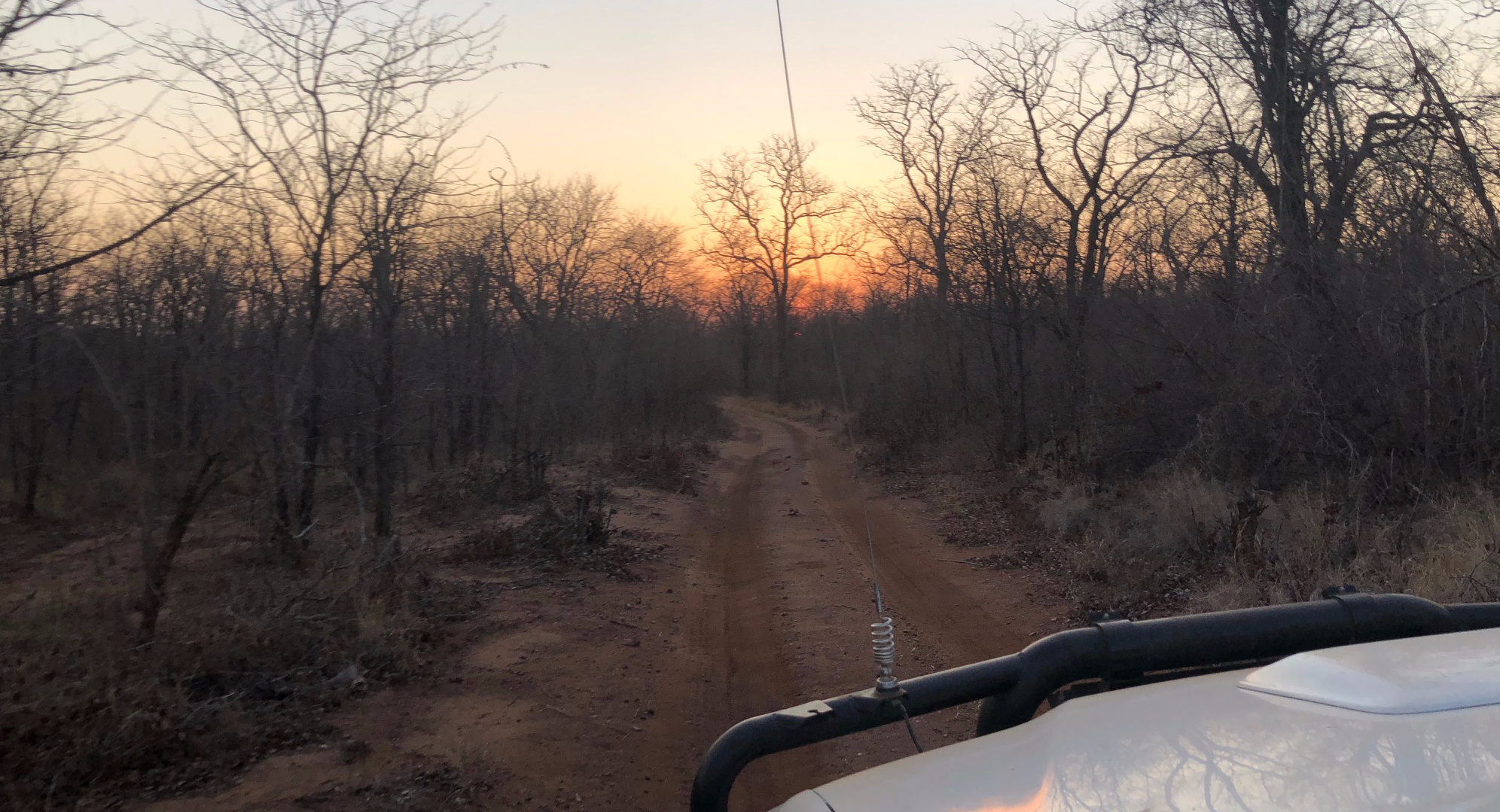
Sunrise in the bush.
We finished back at camp with a few cold brandy and Cokes. Early to bed was on everyone’s list after nearly 18 hours on the road followed by 4 hours of sleep the 2 nights before. The next morning, we were on the road again by 4am on the lookout for buffalo with a few tracks seen but again nothing to show for it. By day 3 we had figured out all the buffalo in the area were coming in at night to eat and then crossing back to Zimbabwe to water and sleep through the heat. At this point we had seen one day in the 90’s and others 110-115 deg Fahrenheit with forecast showing nothing less than 115 for the next week.
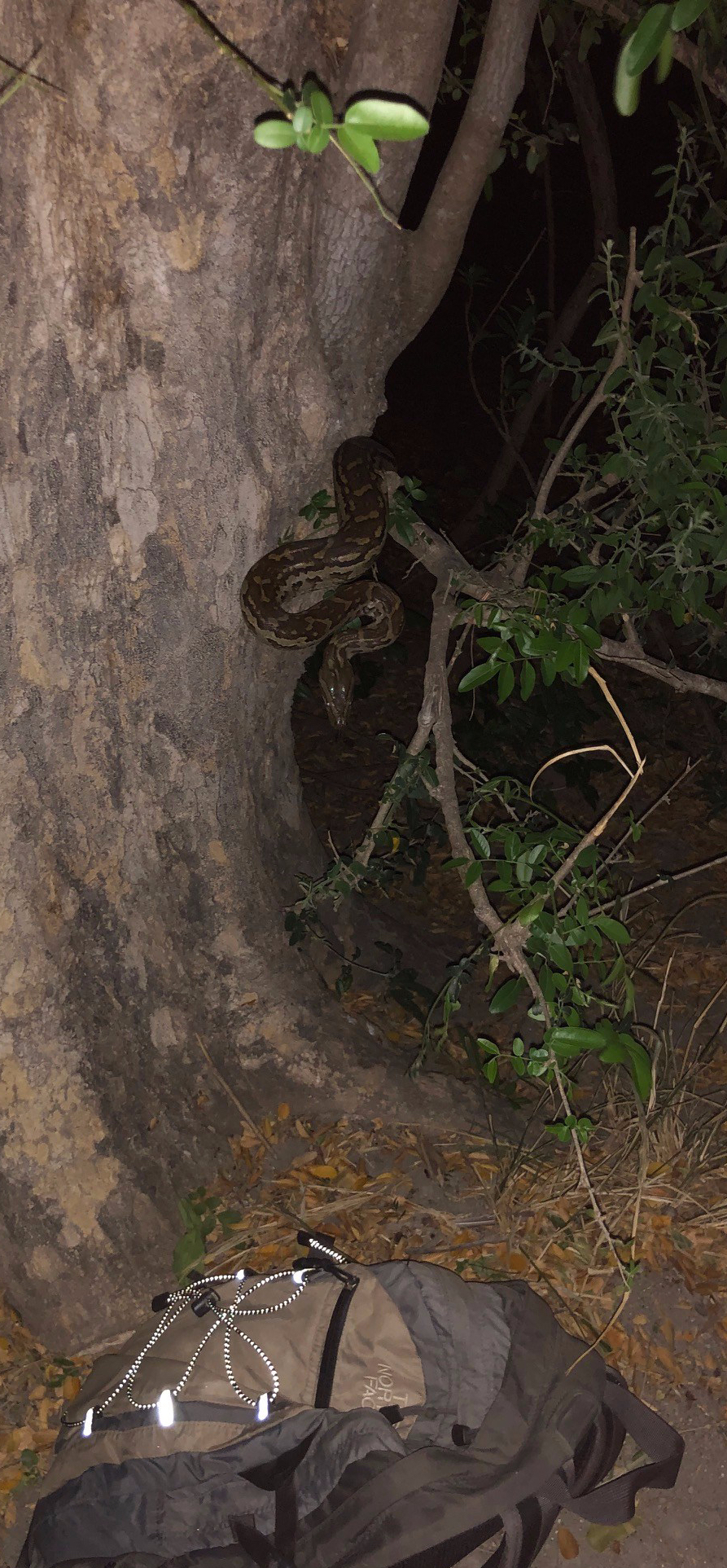
That evening, a PH and I decided to go sit on the largest remaining watering hole to see if an animal on my list might show up at last light. We were quickly surrounded by a giant heard of blue wildebeest, many impalas, and a few other critters but nothing on the list. At last light, I was looking through a bush I had been looking through all evening. This time there was a new branch, the light was so dim, all I could see was a new black line. I moved my head up and down to attempt to see around this new obstruction but had no luck. I could see something large in the distance and thought there might be eland coming to water, a big eland bull was #2 on my list for this trip. About 10 minutes before my issue with this new branch in the bush, an impala was 20 yds in front of me and suddenly became spooked. The wind and sun were in our favor so we knew he was spooking on something else but could not figure out what. As I refocused my attention on this obstruction to my vision, I noticed a new detail. Something moved, it was small but moved quickly, seemingly right in front of my eye. As it began to move again, I figured it out, snake tongue… RIGHT IN FRONT OF MY EYE!!!
I had been laying on that bag when the flicker of snake tongue registered.
Looking into the eyes of over 7 feet of python, as thick as my arm, this guy was an uninvited guest to our hunting party.
As I sit here in the Atlanta airport, I am prepared for what I know to expect, but am almost certainly unprepared for something I will see in the next two weeks. I am prepared to glass, stalk and shoot- I am prepared to miss and to connect. But what about the unexpected, traveling to an area with elephant, hippo, crocodile and leopard will surely provide some surprises. In the past two days I have packed and unpacked at least five times. I did not stop adding or subtracting from my list until 30 minutes before I left for the airport, I am certain I forgot something I will need. The temperature will swing from 60’s to over 100, it could rain, we might need to cross a river, the list of possible needs is long and seemingly never ending. The following is my effort to discuss how I prepared, although only time will tell if it is advice worth following.
In January of 2019, I sat with Beans on our back patio during an unseasonably warm day in Oklahoma. Beans (Gerhard Du Preez of Tootabi Valley Safaris) has been a family friend since I have known my wife. He has guided my wife or I on the majority of animals that now reside in my home in a taxidermized state. He visits us every year before making the safari conference circuit in January and February which usually leads to discussions on the next great adventure over a brandy and coke; unquestionably, his drink of choice. For the last few years this discussion has centered on a cape buffalo hunt in the old Africa style, no high fences and limited accommodations, in the middle of nowhere like Teddy Roosevelt might have seen on one of his expeditions. This most recent time was different, we were planning an actual trip, we discussed the time of year, the specific animals we would look for and many other details that would make for an exceptional hunt.
After deciding on dates, I moved to gear. I have hunted the early archery deer season in Oklahoma but I have never needed several days of hunting gear for the heat. I eventually settled on Columbia PFG gear for its ability to handle heat and provide sun protection for shorts and shirts. I will bring my light hiking boots by Oboz and some trail shoes by Salomon as well as wool socks from Smartwool. I sprayed all clothing in permethrin and brought plenty of DEET and sunscreen. The sun and bugs are supposed to be brutal.
To prepare for the actual hunt I have been shooting my Winchester Model 70 in .375 H&H Mag with Federal Safari loads with Swift A frame bullets. This is the gun that will accompany me on the hunt but I did most of my range work with my .270 off sticks to lessen the discomfort from multiple rounds from a big bore rifle. I use Riflepermits.com to make arrangement for importation of my rifle into SA with additional arrangements needed for Mozambique. I am bringing my Vortex binos, Benchmade hunting knife and a Mavic Pro drone to capture some cool footage of the hunts.
There are many other steps to prepare to cross two international boarders with a gun and ammo from the US. My best advice is use a Professional Hunter you trust and a company like RiflePermits.com to make it smooth.
It is 20 minutes to board, stay tuned to see if any of this makes a difference, I am pretty sure Teddy didn’t do it this way.
By now, most of us that put in for draw tags are either empty handed or eagerly awaiting a fall or winter adventure. For many that means hunting land in our home state that has limited or no access without one of these tags. In my home state of Oklahoma there are a few of these tags I would consider to be at the very top of everyone’s list. For any big game hunter, the once in a lifetime bull elk hunt in the Wichita Mountains of southeastern Oklahoma is the pinnacle. Not to mention that most don’t realize
you can hunt elk in Oklahoma, these hills hold many bulls over 300” and easily satisfy the “once in a lifetime” limit.
While I missed out on an elk tag for the 7 th year in a row, I am not empty handed. I landed the #2 hunt on my list, the McAlester Army Ammunition Plant tag. This is where the whitetail that dreams are made of roam year after year. There is a “Ten Most Wanted” list posted on Facebook and the constant game cam eye candy that floods your social media feed is enough to make anyone drool. But there is a catch, something this good must have a catch… traditional archery equipment only. Low tech, no sights, just
you, a bow and an arrow… and giant deer.
So, I am now seeing the error in my ways, but in my mind, I was always going to use drawing this tag as an excuse to get another bow. After practicing for the last month, I realize 5 months of practice may not be enough. I am currently consuming all the instruction on YouTube and other websites and magazines to get my skill level to a place where I can ethically kill a dream whitetail. I have spent as much time prying arrows out of my wooden fence as I have pulling arrows out of the bullseye, and maybe more time with the fence, but I am having a great time. It’s a new toy and I’m developing a new skill, just a few of the things that make hunting great.
As for equipment, I went with Southwest Archery’s Tiger Shark at 62” and 45# draw weight as well as the Gold Tip Traditional Classic arrows with a total weight of 520 gr. I added beaver tail fur x 2 for silencers and had the arrows cut for my draw length. Currently I am using 3 fingers below the arrow to get closer to my sightline but still experimenting with anchor points on my face. The feel of traditional archery equipment is quite different from a compound, but I am looking forward to the added challenge this fall.
Look into your own state’s controlled hunts or draw tags, there are some pretty great reasons to hunt to travel. Try something new this season, try archery, black powder, lever action, or go upland hunting with a 28 gauge instead of a 12 gauge. Doing something different might just renew the excitement of your first time.
This past year was tough, no hunting lease equaled no outings close to home. It also meant I didn’t take my kids out for the first time in 3 years, and believe me, they asked often when they were going deer hunting. Tag soup on an expensive and time consuming Colorado hunt was tough to swallow and I am still harassed regularly by my wife for no meat in the freezer after that ordeal. The one highlight was a successful mule deer meat hunt to Texas with my cousin where plenty of good times were had. This was easily the least time spent afield I have had in 7 years and a good practice in patience considering the constant desire to go hunt.
Convention Season
Someone once told me you can always do something for a cause you believe in, usually in the form of time or money, give which ever you have at the time. I believe in conservation, as humans expand further and further into former wildlife habitat, we must take a role in providing adequate habitat for our neighbors. At various times in my life, I have had time or money to give, rarely both and sometimes neither. Recently, I have given most frequently to RMEF and Delta Waterfowl. Last year I was able to serve on the committee for our local RMEF chapter but this year time was something I could not give. I was able to round up ten buddies and attend our local Delta Waterfowl dinner and have a hell of a good time last month. We tried our hand at the live auction, bought raffle tickets and drank plenty of beer. I got the chance to describe a hunt with a great new outfitting group out of Garber, OK called FowlCo Outfitters that is bringing first class bird hunting to Oklahoma. In the end, we provided habitat and more to ducks from our flyway all the way across the country. I would encourage everyone to give what you can- time, money or something else, but don’t assume the game you love to pursue will survive without your willingness to be part of the equation.
Looking Ahead
Normally this is when I would start training for next season’s hunt and chasing gobblers but the hard training for the elk hunt wore out what was left of my knee cartilage and I get to spend turkey season on crutches recovering from knee surgery. That said, no recovery goes well without a goal, so I have booked Africa for October this year and will let that be my driving force to rehabilitate quickly so I can outrun the cape buffalo, or at least not be the slowest guy in the group. The next few installments will be more on booking and planning that trip. I think Africa is an attainable, once in a lifetime trip for almost everyone. The more you know about how to plan and prepare, the more realistic that dream can be.
My elk hunt began in November, the day before 3rd rifle season opened in the Colorado backcountry of the San Juan Mountains. I had high hopes but had been cautioned of the rigors of elk hunting on public land, especially late in the season. I had met some of the other hunters the night before we headed out for a beer in Durango at one of the local brew pubs. We told tall tales of previous hunts, one hunter had just returned from a successful elk hunt in New Mexico and was looking forward to punching another tag in the upcoming week. The following morning we all met at a grocery store on the edge of town to load up on necessities before heading into the mountains. About 1 hour later we were driving through the gates of Purgatory Ski Resort, little did I know that was an appropriate name for what lie ahead. After an additional drive on public roads we came to a small camping area where we parked our trucks for the week and loaded our gear onto horses.
Trail Ride In
After several miles on trail we arrived at our basecamp near several trails headed out along various ridges. This location also put us next to a water source for the week. We unloaded gear and settled in for the night with cold beer and a hot meal. I left my gear packed in order to head out to a more remote camp site later that evening.
We woke up to six inches of fresh snow the next morning and hoped we would be able to cross some tracks on our way up the mountain. We spent the first hours of sunlight glassing several ridges of heavy timber and a few openings of aspens. With only a few cows we kept moving up the ridge, the first day included a climb to over 9,000 feet and just shy of 10 miles on foot with very little to show for it. The ruggedness of the area and the difficult climbing caused the other group in camp to pack up and go home after the first day, in hindsight those boys made a good decision.
Glass, Climb, Repeat
Cold, tired, sore and no elk
Days 2 through 4 were more of the same. We climbed to over 10,000 feet everyday, usually with a total of 10-15 miles on and off trail. The part my body was not prepared for was the side-hilling. That is where you walk sideways along a steep hill, usually on no trail. This causes your foot to slide sideways with every step and results in the most impressive blister collection I have ever had. Despite well seasoned mountain boots, my feet were shredded by the final day, next time around I will need a more narrow boot for this type of terrain. Otherwise the gear held up well. I used a combination of Sitka and Kuiu clothing and stayed warm and dry no matter the weather or temperature. I think both offer excellent performance but Kuiu has better sales throughout the year and has a few pieces that show more thought for the mountains.
Day 5 started well before sunrise in order to get to the top of a nearby ridge before sunrise. We made it up a slippery, steep incline in the dark as I learned more mountaineering skills, namely how to not slide down several hundred feet of rocky mountain face every time you lose your footing. As we came down the ridge into a flat spot, we heard the startled foot steps of a large group of elk about two seconds before we caught their scent. Unfortunately, the ground was still hard frozen and our chances of tracking were slim considering it was still dark and the echoes of their departure across the mountain ridges made it difficult to pin point the direction of their exit. There were no more elk located near enough to make a stalk and I was resigned to eat tag soup for dinner.
The Long Ride Home
The drive home was tough, thinking about the time I spent in the gym preparing my body, the money I spent on the hunt and the gear, and the time I spent away from my family was all frustrating. I kept coming back to what was my “glass half full” takeaway from this trip. Oddly enough it was the pain and suffering, or more accurately the challenge that caused it. This was the hardest I have pushed my body since I was in high school, it was a daily struggle to quiet my mind and keep walking up the mountain. When my lungs burned and struggled to breathe deeply in the cold air or I could feel a blister pop in my boot as I continued to hike further away from camp, I was satisfied with the mental toughness that allowed me to press on. I attribute this in large part to the prep from mtntough fitness. This time that pain and suffering wasn’t rewarded with elk meat in the freezer but I plan to try again in the upcoming years. Although, I might try in an area that offers a better omen than Purgatory.
With the exception of walking across the border to Mexico and a few beach trips to the Caribbean, , I had never left the United States when I embarked on my first trip to Africa in the spring of 2013. I made plans with one of my long time friends to spend 10 days hunting plains game in the Eastern Cape of South Africa. I had no idea what to expect as my big game experience was limited to whitetail hunting in Oklahoma. We had booked our hunt with Tootabi Valley Safaris and guide/outfitter Gerhard Du Preez (Beans). Beans, as he is known to his friends, had guided my wife on previous hunts and had become a close friend prior to our trip.
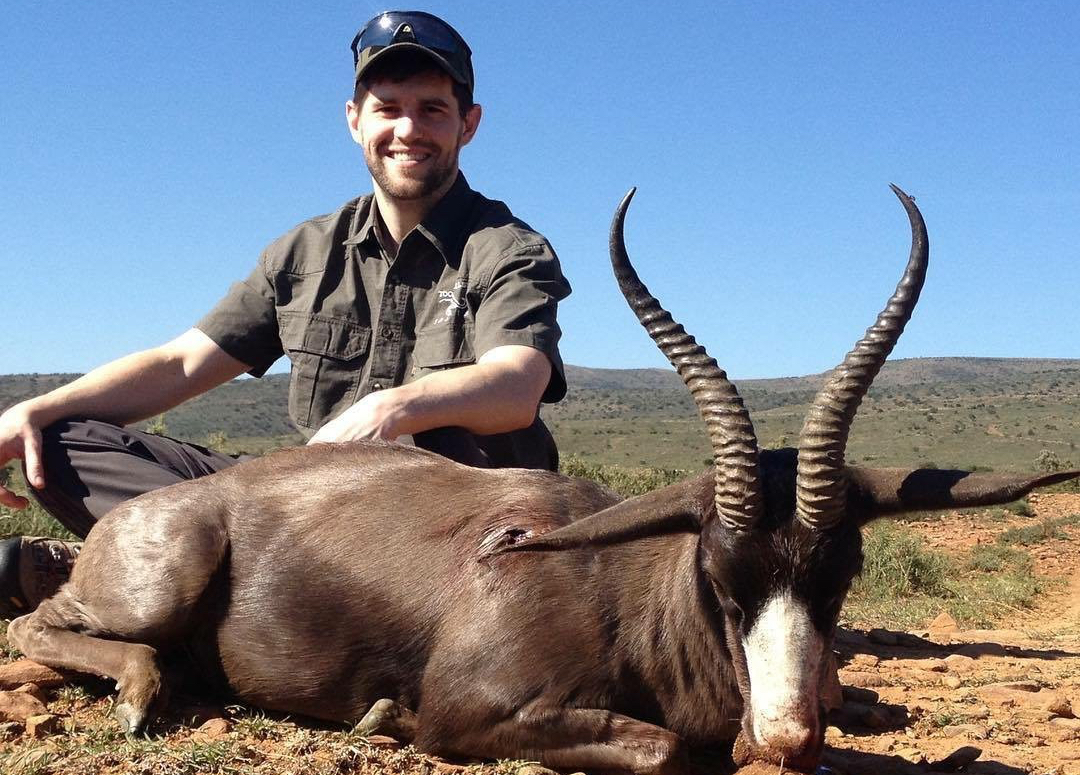
We spent several days drinking whiskey and planning our hunt on his 2012 visit to the U.S. for safari club meetings. We had settled on a few goals, first was to work on a family springbuck slam. My wife had already taken a common springbuck on her previous trip so I planned to shoot a black and white springbuck. The black springbuck above was the first animal I hunted on my trip. After waking up early for breakfast and several rounds of strong coffee to help adjust to the time change, we were on our way. Hunting on a large ranch about two hours outside of Port Elizabeth, we drove over a ledge on a winding dirt road to reveal an expansive plain with more animals than I had ever seen. My first exposure was overwhelming to say the least, in one view I could see two types of springbuck, wildebeest, zebra and blesbuck. We settled near one of those stereotypical African trees to hide in the shadows while we prepared to make a stalk on a group of springbuck over a small ridge. Before I could put my Barnes bullets into the magazine the herd of black springbuck had come to us, they were running directly to our tree away from some perceived danger over the ridge. As I hurriedly inserted the magazine and pulled the legs of my bipod down, Beans began to call out positions of particularly high quality trophy animals. By the time I ran the bolt and had my view of the heard through the scope, the first group had passed and I was locating the second animal Beans had described. Once I confirmed I was on the right animal, I waited for the group to slow down. Right on cue the animal in my crosshairs hit the brakes and slowed to a walk. Trying to keep the crosshairs on target with my level of excitement was difficult but I slowly squeezed the trigger and the animal disappeared after the thwack of the bullet striking home. Dinner was served and I was officially an African big game hunter, I was pumped.
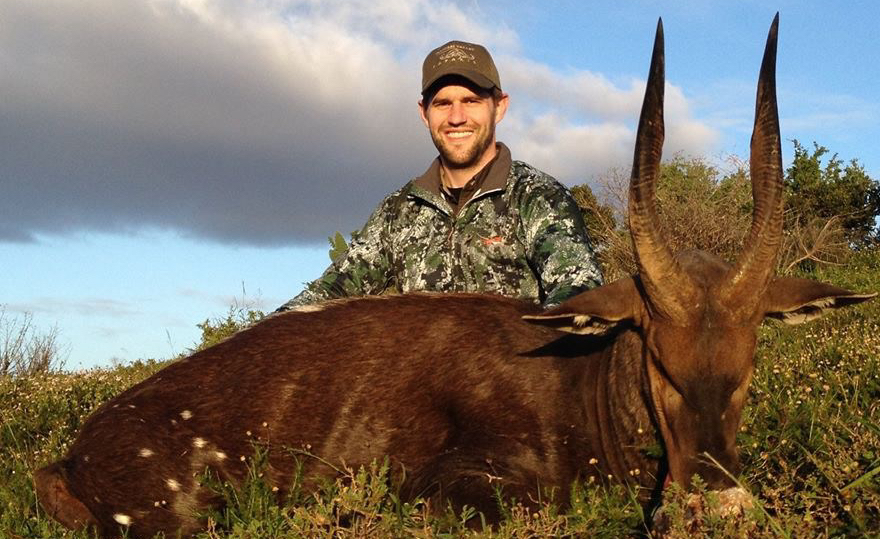
The second goal was to find a great kudu bull, the keystone of any first-time African safari, but a different opportunity presented itself before we made it that far. I learned that sometimes animals not on your list present a once in a life time opportunity that you can’t pass up. On day three and now in the Tootabi Valley, we were glassing from a high point into a small valley down a cut line. With the sun behind us and the wind in our faces, we were in a perfect position to stalk down the tree line. Soon after raising our binos to glass, a giant bushbuck stepped out from thick cover to graze amongst some kudu cows. We walked in the shadows along the trees down hill until we were about 175yds away, between the kudu cows and our target bushbuck, we didn’t want to press our luck. I set up on my bipod and sent the shot down range striking perfectly behind the right shoulder. He hopped once and fell into the bush, but knowing an injured bushbuck can be an absolute nightmare, we gave him 30 minutes to make sure the deed was done. He measured as the #21 bushbuck SCI, like I said, sometimes plans change for once in a lifetime opportunities.
Eventually, I got my kudu, white bushbuck and a few other great plains game. I was able to try meat from every animal we hunted and it was all delicious. The people, scenery, friendship and memories are an experience that will stay with me forever. I think regularly about crossing the equator again and look forward to my next trip to Africa. If you have ever considered going to Africa, I highly recommend Tootabi Valley Safaris as they are a first class operation. Beans and his team find incredible animals and provide excellent lodging and accommodations. If you have any questions about planning a safari, please don’t hesitate to ask.
At just under 3 months until my November rifle hunt in the San Juan mountains of southwest Colorado, I decided it was time to test my training. Some of my favorite travel companions were headed to Utah for golf, fly-fishing and relaxation to escape the August heat so my wife and I accepted the invitation to head west. I am currently 2 months into the MTNTOUGH fitness lab 12-week training course that is aimed at preparing the mind and body for the intensity of backcountry hunting. This course has challenged my legs and my will almost daily and I felt like it was time to test them both at altitude. So between golf and fishing, I headed out on two separate days on trails in the Park City area to push the body and the new equipment.
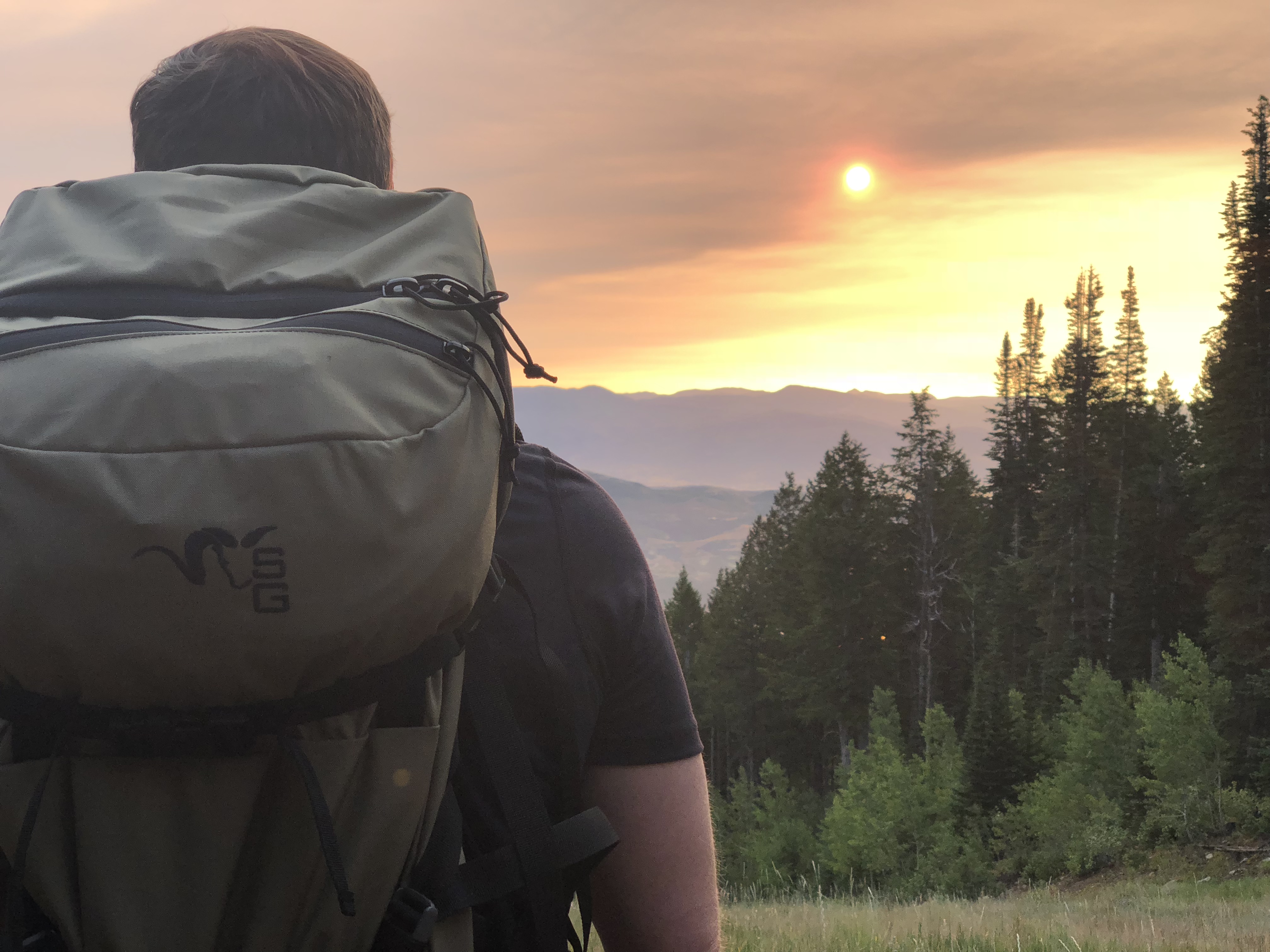
Before this trip I had spent hours reading reviews, watching youtube videos and doing everything else you can think of to decide on the best equipment for my first backcountry hunting experience. My grandfather always told me to buy the best you can afford the first time or you will end up buying it later after you waste your money on the cheap stuff. I took this to heart and limited my search to Kifaru, Kuiu, Mystery Ranch and Stone Glacier for pack systems. After 1 month of research I bought the Stone Glacier XCurve frame with load cell dry bag. I had spent the two Saturdays leading up to the trip with 40 lbs in the dry bag strapped to the frame, hiking around the neighborhood. I found the hip belt on this bag to be extremely comfortable and without any hotspots. I decided to go with the Evo 3300 bag as I felt like it would be adequate for 2-3 day hunts from spike camp without excessive storage that I wouldn’t use. I bought several accessories but did not use them on this particular adventure.
The first hike was 3 miles with 500 ft elevation gain and the second was 4.2 miles with 700 ft of elevation gain, both along trails I entered at the base of Silver Lake Lodge in Deer Valley, Utah. I thought the pack worked well and without any issues to report. The adjustments you can make on this pack will solve any issue and the support staff at Stone Glacier is top notch if you have trouble finding a solution. They have a video series that will address most fit issues and also make mounting bags and accessories very easy. Needless to say, I am very happy with the purchase and I will update further after the hunt.
The workout program from MTNTOUGH is second to none. I can’t begin to thank that group out of Bozeman enough for what they have done to prepare my mind and body. I am in the best shape I have been in over the last 15+ years and I know with another 2 months of training I will be prepared to haul out an elk if I can find success. These workouts are brutal and show no mercy. Dustin, Ara and Alex have used their combined experience as hunters and soldiers to build an incredible system to prepare the legs, core and shoulders to maneuver the mountains with heavy packs. The discomfort that each of the workouts can put you through prepares the mind for those moments when you want to quit but can’t. I highly recommend checking them out if you aren’t sure how to prepare for this hunting season.
One last product I used for this experience was Solitude from MTNOPS, they are a supplement company geared toward the outdoors. I have been a big fan of their products for a few years and have been using them daily in combination with the MTNTOUGH workouts. It is hard for me to give an objective opinion since I did not do the same hikes without the supplements but I can say that any help I can get when going from 700′ to 6500′ as a starting point is welcome. I can absolutely recommend their products in general as I have found better stamina during workouts and quick recovery post-workout using Yeti, Enduro and Magnum.
To be clear, I am not getting anything for promoting any product here, but I think its helpful to share good and bad experiences to help each other out. I would love to hear about what packs, workouts and supplements you all have used for success in the backcountry. As for me, I think I am on the right track for this years hunt.





 Hunt 2 Travel